
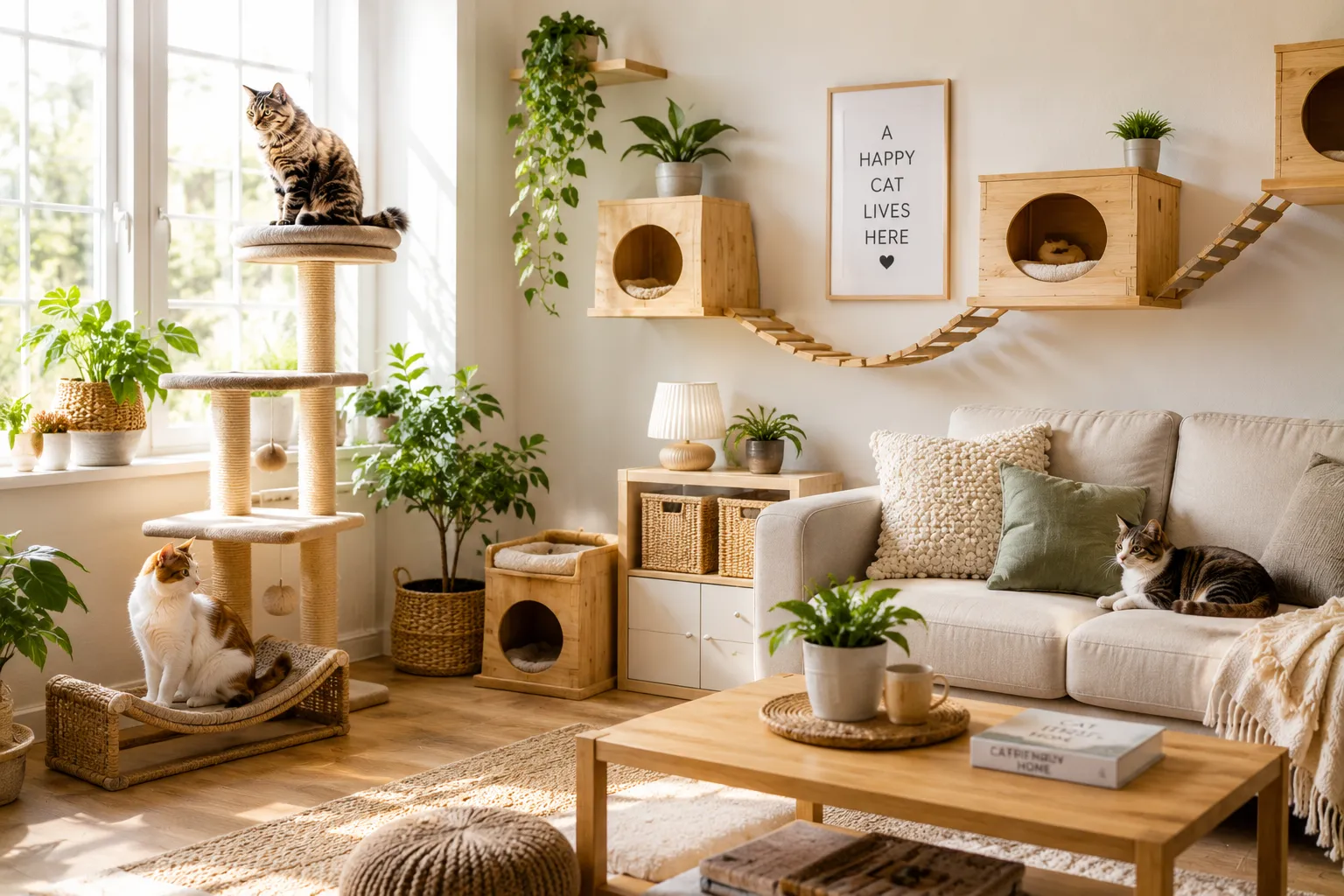
Let us be real for a second. Most homes are designed for humans. We love open floor plans, minimalist shelves, and furniture that costs more than a used car. Cats, however, look at our sleek, empty spaces and think: "Wow. No place to hide, nothing to climb, and exactly zero opportunities to spy on the neighbors. Terrible."
Here is the truth: your cat does not care about your mid-century modern aesthetic. They care about territory, safety, and having enough vertical real estate to judge you from above. A cat-friendly home is not about turning your living room into a furry circus. It is about making small, smart tweaks that let your cat express natural cat behavior without destroying your sanity or your sofa.
This guide breaks down exactly how to design a cat-friendly home, room by room. We are talking vertical space, hiding spots, safe zones, and all the little details that turn a house into a place where both you and your cat actually want to live.
1. Why Cat-Friendly Design Matters (Beyond Saving Your Furniture)
Cats are not tiny dogs. They are not even tiny humans. They are descendants of solitary hunters who spent their days stalking prey, climbing trees to escape predators, and hiding in dense vegetation to nap undisturbed. Your apartment with its bare walls and one couch is basically a predator-exposed desert to their instincts.
When cats cannot express natural behaviors — climbing, scratching, hiding, perching, and stalking — they get stressed. And stressed cats develop what veterinarians call "problem behaviors." That is a polite way of saying they pee on your bed, shred your door frames, or scream at 3 a.m. because their environment is boring and anxiety-inducing.
According to International Cat Care, providing an environment that meets a cat's need for camouflage, elevation, and mental stimulation significantly reduces stress-related illness and behavioral issues. A well-designed cat home is not a luxury. It is preventative healthcare with better lighting.
2. The Living Room: Command Center And Jungle Gym
The living room is where your cat probably spends the most time — and where you probably want them the least when company comes over. This is the room to invest in vertical space and entertainment.
Vertical Real Estate Is Non-Negotiable
Cats need to be up high. It is hardwired into their DNA. High perches let them survey their territory, escape perceived threats, and feel like the apex predator they believe themselves to be.
Install floating cat shelves along one wall, creating a staircase effect that leads to a high perch. You do not need to cover every wall. Even two or three sturdy shelves near a window turn dead space into prime cat real estate. If you are renting and cannot drill, a tall, sturdy cat tree with multiple levels works wonders. Look for one with a sisal-wrapped post for scratching and a cozy cubby for hiding. Your cat will thank you. Your guests will just think you are really into modern sculpture.
Window Perches: Cat Television
A window perch is quite possibly the cheapest enrichment tool you can buy. Cats will spend hours watching birds, squirrels, leaves moving, or that one guy who always walks by at weird hours. It satisfies their predatory instincts without any actual bloodshed. Add a bird feeder outside the window and you have basically built a five-star cat resort.
Scratching Posts: Location Is Everything
Scratching is not misbehavior. It is a biological necessity. Cats scratch to stretch their muscles, shed old claw sheaths, and leave scent marks from glands in their paws. If you do not provide appropriate scratching surfaces, your vintage armoire becomes the scratching surface.
Place scratching posts near entryways, sleeping areas, and anywhere your cat naturally stretches after a nap. The post must be tall enough for your cat to fully extend vertically — at least 30 inches for most adults — and sturdy enough that it does not wobble. A wobbly post is an unused post. Sisal rope and corrugated cardboard are the most popular materials. Experiment to see what your cat prefers, then buy multiples.
Hiding Spots In Plain Sight
Every living room needs at least one hiding spot where your cat can vanish when the vacuum comes out or when your in-laws visit. An enclosed cat bed, a cardboard box with a cutout doorway, or even a blanket draped over a side table creates an instant cave. According to the ASPCA, hiding spaces reduce stress by giving cats control over their environment. Control equals calm.
3. The Kitchen And Dining Area: Food, Water, And Boundaries
Kitchens are full of smells, sounds, and opportunities to beg for chicken. They are also full of hazards. Here is how to make this space work for both species.
Create A Dedicated Feeding Station
Cats are solitary hunters and feeders by nature. They do not love eating shoulder-to-shoulder with other pets, and they definitely do not love eating next to their toilet. Move food and water bowls away from the litter box and, ideally, away from high-traffic areas where they feel exposed while eating.
Use wide, shallow ceramic or glass bowls. Deep bowls push against their sensitive whiskers and cause "whisker fatigue," which makes eating uncomfortable. If you have multiple cats, feed them in separate locations — not lined up like a cat buffet. This prevents resource guarding and lets everyone eat in peace.
Water Bowl Rules
Never place water directly next to food. In the wild, cats do not drink where they eat because prey contamination is a real risk. Domestic cats still carry this instinct. Place water bowls in a different spot, and consider a pet fountain. Many cats prefer running water because it signals freshness. Plus, the gentle bubbling sound is weirdly soothing for humans too.
Counter Jumping: Management, Not War
You are never going to win a battle against a cat who wants to see what is on the counter. Instead, make the counter boring and provide better alternatives. Keep food put away, wipe counters so there are no enticing crumbs, and place a tall cat tree or shelf nearby so they can still supervise your cooking from a permitted perch. Double-sided tape or motion-activated deterrents can help during training, but the real fix is giving them a better vantage point that is not your granite.
Remove Toxic Hazards
Keep cleaning supplies, essential oils, onions, garlic, chocolate, and anything containing xylitol locked away. Many common houseplants are toxic to cats — lilies, pothos, and philodendron can cause serious illness. Swap them for cat-safe greenery like catnip, cat grass, or spider plants. When in doubt, check the ASPCA poison control list.
4. The Bedroom: Sleep Sanctuaries And Nighttime Negotiations
You spend a third of your life in bed. Your cat spends roughly 70% of their life asleep. The bedroom should work for both of you.
Bed Placement For Cats
Provide at least one cat bed in the bedroom, ideally raised off the floor and near a heat source or sunny window. Cats prefer sleeping in elevated spots because they feel safer and can monitor the room. If your cat sleeps on your bed, great. If they prefer their own space, respect that. Not every cat wants to be a little spoon.
Nighttime Zoomie Management
If your cat treats your bedroom like a racetrack at 2 a.m., the problem is usually daytime boredom, not nighttime evil. Make sure your cat gets a solid play session before bed — 10 to 15 minutes of interactive wand toy play mimics hunting and burns energy. Feed them a small meal afterward. The hunt-eat-groom-sleep cycle is powerful. A tired, full cat is a quiet cat.
Keep The Litter Box Out
Do not put a litter box in the bedroom unless you have absolutely no other option. Cats prefer to eliminate away from where they sleep and eat, and honestly, so do you. If space demands it, use a covered box with a carbon filter and scoop religiously. But ideally, the bedroom remains a sleep zone, not a bathroom.
5. The Bathroom: Litter Box Real Estate
The bathroom is usually where the litter box lives, and most people place it with zero strategy. Let us fix that.
The Golden Rules Of Litter Box Placement
The general rule is one litter box per cat, plus one extra. Two cats? Three boxes. Three cats? Four boxes. Spread them throughout the house, not clustered in one laundry room. No cat wants to cross another cat's path to use the toilet, and cornered cats feel vulnerable.
Place boxes in quiet, low-traffic areas where your cat has multiple escape routes. Avoid putting them next to noisy appliances like washing machines. Use uncovered boxes — many cats feel trapped in covered ones, and the trapped smell is unpleasant for everyone. Scoop daily. Full stop. A dirty box is the number one reason cats eliminate outside the box.
Ventilation Matters
Bathrooms get humid, and humidity makes litter clumps fall apart and smell worse. If your litter box must live in the bathroom, keep a small fan running or leave the door cracked for airflow. Use a high-quality clumping litter and change the entire box monthly. Your nose and your cat's paws will thank you.
6. The Home Office: Productivity Meets Purrductivity
Working from home with a cat is a blessing and a curse. They want to be on your keyboard, in your Zoom frame, and knocking your coffee onto important documents. Here is how to share the space without losing your mind.
Give Them Their Own Desk Spot
Place a cat bed or heated pad on a windowsill, shelf, or side table near your desk. Cats want proximity, not necessarily contact. If they have a designated spot where they can watch you work, they are far less likely to sit on your laptop. Emphasis on "far less likely." There are no guarantees with cats.
Manage Cables And Small Objects
Cats chew cords. It is a fact of life. Use cable management boxes, cord protectors, or bitter apple spray to deter oral fixation. Keep paper clips, rubber bands, and earbuds in drawers. These are choking hazards and expensive vet visits waiting to happen.
Interactive Breaks
Use your coffee breaks for cat play. A quick five-minute wand toy session breaks up your day and satisfies your cat's need for interaction. A mentally stimulated cat is a cat who naps under your desk instead of deleting your emails.
7. The Great Outdoors... Sort Of: Catios And Window Boxes
Indoor cats live safer, longer lives. But they still crave fresh air, bird sounds, and the smell of grass. Enter the catio — an enclosed outdoor patio for cats.
Catios range from simple window box inserts to full backyard enclosures with shelves, tunnels, and bridges. Even a small balcony enclosure with a perch and some potted cat grass gives your cat sensory enrichment they cannot get indoors. If a catio is not in the budget, secure window screens and a sturdy window perch are the next best thing. Just make sure screens are pet-grade and locked. Cats are escape artists when motivated by a squirrel.
Fresh air carries scents and sounds that mentally engage your cat. According to International Cat Care, outdoor enclosures provide environmental enrichment that reduces indoor stress and associated behavioral problems. It is basically a spa day for their brain.
8. Multi-Cat Households: Preventing World War III
If you have more than one cat, your home design needs to prevent resource competition. Cats are not pack animals. They do not naturally share, and forcing them to do so creates stress, fighting, and inappropriate elimination.
Spread resources — food, water, litter boxes, beds, and scratching posts — throughout the house so no cat can guard them all. Each cat should be able to access necessities without crossing another cat's path. Vertical space is even more critical in multi-cat homes because it increases the usable territory without adding square footage. When cats can avoid each other by going up or down, conflict drops dramatically.
Plug synthetic feline facial pheromone diffusers in shared spaces. These mimic the calming scents cats leave when they rub their cheeks on things, essentially broadcasting "this place is safe" to everyone in the house. They are not magic, but they take the edge off during transitions, renovations, or new cat introductions.
9. DIY Enrichment: Champagne Cat Care On A Beer Budget
You do not need to spend a fortune to make your home cat-friendly. Some of the best enrichment tools are free or nearly free.
Cardboard boxes: The ultimate cat toy. Cut doorways between boxes, stack them, or leave them scattered. Cats hide in them, sleep in them, and shred them. Rotate boxes every few weeks to keep things novel.
Paper bags: Remove the handles first, then toss them on the floor. Cats love the crinkle and the cave-like interior. Never use plastic bags — suffocation risk is real.
DIY puzzle feeders: Hide kibble in toilet paper rolls, egg cartons, or ice cube trays. Let your cat bat them around to release food. This satisfies their hunting instinct and slows down gobblers. The ASPCA has excellent DIY enrichment tutorials if you want to get crafty.
Cat grass and catnip: Grow your own. Most cats love nibbling on wheat grass or oat grass, and it aids digestion. Catnip toys or sprinkled dried nip on a rug can turn a boring afternoon into a rolling, purring party. Note that roughly 30% of cats do not respond to catnip — genetics, not personality.
Rotate toys: Put half the toys away for a month, then swap them. Novelty is enrichment. A toy that has been in a drawer for three weeks suddenly becomes interesting again. It is the feline equivalent of rediscovering a favorite song.
Frequently Asked Questions
How much vertical space does a cat really need?
There is no magic number, but ideally your cat should be able to traverse a room without touching the floor. That does not mean covering every wall in shelves. Even one tall cat tree or a few wall perches give them the elevation they crave. In small apartments, vertical space is how you double your cat's territory without moving.
Do cats need hiding spots if they are friendly and social?
Yes. Every cat needs a place to retreat, even the outgoing ones. Hiding spots are not just for shy cats — they are stress relief for all cats. Think of it as their version of a panic room. When the doorbell rings, the vacuum roars, or the toddler visits, having a safe zone prevents meltdowns.
Where should I NOT put a litter box?
Avoid placing litter boxes near food and water bowls, in noisy laundry rooms, in dark closets with only one exit, or in areas where other pets or children can corner the cat. Cats need to feel safe while vulnerable. A trapped cat will find somewhere else to go — usually your rug.
Are covered litter boxes better?
Generally, no. While humans love them for odor control, many cats feel trapped inside covered boxes. The trapped odors are also unpleasant for the cat's sensitive nose. If you must use a covered box, make sure it is large, well-ventilated, and scooped obsessively. Most cats prefer open, spacious boxes where they can see their surroundings.
Can I have a cat-friendly home that still looks nice?
Absolutely. Modern cat furniture is shockingly stylish. Floating shelves, minimalist cat trees, and sleek wall-mounted perches can blend into contemporary decor. Choose pieces in neutral tones that match your palette. A well-placed cat bed can look intentional rather than cluttered. The key is choosing quality pieces that serve both species.
What if I live in a tiny apartment?
Small spaces just require more creativity. Use vertical wall space, the backs of doors for hanging scratchers, and multi-functional furniture like storage ottomans that double as cat caves. A window perch takes up zero floor space. Even studio apartments can be cat paradise with the right layout.
Related CatCutieSweet Guides
The Bottom Line
Designing a cat-friendly home is not about sacrificing your style or turning your house into a pet store exploded. It is about understanding what cats need to feel safe, stimulated, and in control — then building those elements into your existing space with a little creativity and a lot of empathy.
Your cat needs places to climb, hide, scratch, perch, and observe. They need clean litter boxes in safe locations, water away from food, and enough mental stimulation that they do not turn your curtains into a shredding project. Give them these basics and you will have a happier, healthier cat who is far less likely to express their displeasure on your favorite rug.
Remember: your home is their entire world. You get to leave. They do not. Making that world enriching, secure, and entertaining is the least we can do for the tiny predators who share our beds, steal our chairs, and occasionally bring us dead things as gifts. Design with them in mind, and you will both live better.