
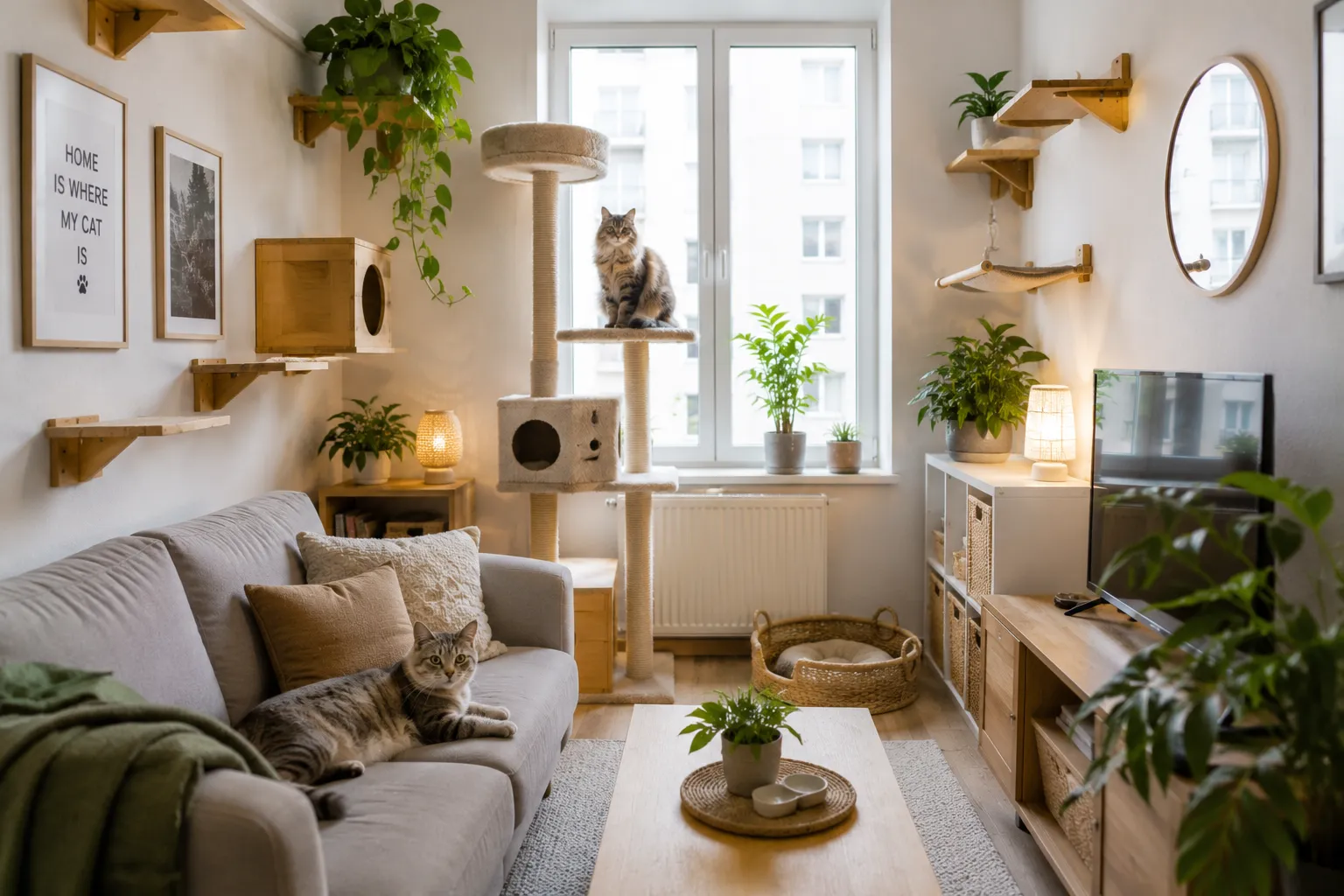
Let us paint a picture. You live in a 600-square-foot apartment. Your "dining room" is a folding table that doubles as your desk. Your closet is technically a hallway with ambition. And somehow, you have decided to share this glorified shoebox with a creature who, in the wild, would roam territories the size of several city blocks.
Welcome to apartment cat parenting. It is chaotic, it is cozy, and it is absolutely doable — as long as you stop thinking like a human with square footage anxiety and start thinking like a cat with vertical ambition.
Cats do not measure space in square feet. They measure it in usable territory — places to climb, hide, perch, scratch, and stalk. A studio apartment with smart design can feel bigger to a cat than a sprawling house with bare walls and one sad couch. The trick is maximizing what you have, minimizing stress, and accepting that your cat will claim the best sunbeam regardless of your lease agreement.
Here is your room-by-room, wall-by-wall guide to managing cats in small apartments and creating an indoor environment where they do not just survive — they thrive.
1. The Mindset Shift: Small Space, Big Territory
Before we talk about furniture, let us talk about philosophy. Your cat does not care that your apartment is tiny. What they care about is whether their environment meets their biological needs. Cats are hardwired for territory, elevation, and predatory behavior. When those needs are met, a small space feels expansive. When they are ignored, even a mansion feels like a prison.
According to VCA Animal Hospitals, vertical space is not a luxury for cats — it is essential for their mental and physical well-being. In small apartments, where floor space is limited, vertical furniture becomes even more critical. It allows you to expand your cat's territory upward instead of outward, essentially doubling or tripling their usable space without adding a single square foot.
The goal is not to turn your apartment into a cat jungle gym. It is to create a space where both species — human and feline — can coexist without driving each other insane. That means designated cat zones, strategic furniture placement, and accepting that some of your "decor" will now involve sisal rope.
2. Vertical Space: Your Secret Weapon
If you take one thing from this article, let it be this: in a small apartment, vertical space is everything. Walls are free real estate, and cats are natural-born climbers. A cat who can traverse the room without touching the floor is a cat who feels rich in territory.
Cat Shelves And Wall Highways
Install floating cat shelves along one wall, creating a staircase effect that leads to a high perch near the ceiling. You do not need to cover every wall. Even two or three sturdy shelves near a window turn dead space into prime cat territory. Look for shelves with a lip or curved edge so your cat can nestle in without falling off during a nap. Cat Advocate recommends connecting vertical spaces with shelves to create a "superhighway" — a continuous elevated path that lets cats navigate the room like furry little highway commuters.
Cat Trees That Do Not Eat Your Living Room
Not all cat trees are beige carpet monstrosities that swallow half your floor space. Modern compact cat trees are designed specifically for small apartments — tall, narrow, and multi-functional. Look for ones with a small footprint but multiple levels, a scratching post, and a cozy cubby. Place it near a window if possible. A cat tree by a window is basically a penthouse suite. PetPlace recommends corner cat trees and wall-mounted options for tight spaces.
Window Perches: The Ultimate Small-Space Hack
A window perch is the single best investment for apartment cats. It takes up zero floor space, provides endless entertainment, and satisfies your cat's need to survey their kingdom. Suction-cup window seats are inexpensive, easy to install, and removable when you move. Place one in front of a window with bird activity, and you have just built a five-star cat resort for under $30. Young-Williams Animal Center notes that window perches provide both a high vantage point and access to natural sunlight, which helps regulate body temperature and supports natural sleep rhythms.
Repurposed Furniture
You do not need to buy everything new. A sturdy bookshelf with a cat bed on top becomes a perch. The top of your wardrobe is prime real estate if your cat can reach it safely. Even a tall dresser with a cleared-off top serves as an observation deck. Just make sure any elevated furniture is stable and cannot tip if your cat launches themselves onto it at Mach 3 during the zoomies.
3. Hiding Spots: Privacy In A Tiny Space
Every cat needs a place to disappear. In a small apartment, that is harder because there are fewer rooms to vanish into. But hiding spots do not need to be entire rooms. They just need to feel enclosed and safe.
Under-bed caves: If your bed frame allows, place a low-sided cardboard box or a soft cat cave underneath. Instant hiding spot that takes up zero extra space.
Enclosed cat beds: These look like tiny tents or igloos and give cats a den-like feeling. Place one in a quiet corner or on a shelf.
Behind furniture: Leave a small gap between the couch and the wall, or between a bookshelf and the corner. Cats love squeezing into spaces that seem too small for them. It is their version of a panic room.
High hideaways: A cat tree with an enclosed cubby at the top level combines elevation and privacy. Your cat can see everything while being essentially invisible. That is the dream.
According to Vitakraft, cats need places to retreat when they want to escape the hustle and bustle. An extremely tidy, clear apartment with too few pieces of furniture is actually unsuitable for cats because they have nowhere to hide. A little strategic clutter — a draped blanket over a chair, a box in the corner — goes a long way.
4. The Litter Box Situation: Small Space, Big Smell
This is the part nobody wants to talk about, but we have to. In a small apartment, litter box odor is not just a nuisance — it is an existential threat to your quality of life. And your cat's.
The golden rule is one litter box per cat, plus one extra. Two cats? Three boxes. In a studio, that sounds impossible, but it is not. You just need to be strategic.
Hidden in plain sight: Use a decorative bench or cabinet with a cutout door to hide the litter box. There are furniture pieces designed specifically for this — they look like side tables but house a litter box inside. Your guests will never know. Your cat will appreciate the privacy.
Multiple small boxes: Instead of one giant box, use two smaller ones tucked in different corners. A bathroom closet, a corner of the bedroom, under a desk — anywhere with ventilation and escape routes works.
Scoop daily. No exceptions. In a small apartment, a dirty litter box fills the entire space with smell in hours. Scoop every day, change the litter completely every two weeks, and wash the box with unscented soap monthly. Use a high-quality clumping litter and consider a small air purifier near the box. Your nose, your cat's health, and your dating life all depend on it.
Avoid covered boxes if possible. Covered litter boxes trap odors inside, which is great for you but terrible for your cat's sensitive nose. In a small space, the smell concentrates even more. If you must use a covered box for aesthetics, make sure it is large, well-ventilated, and obsessively cleaned.
5. Scratching Posts: Save Your Security Deposit
Cats scratch. It is not optional. It is a biological necessity for stretching muscles, shedding old claw sheaths, and marking territory with scent glands in their paws. In a rental apartment, unchecked scratching can cost you your security deposit and your landlord's goodwill.
Provide multiple scratching surfaces in different locations. A tall sisal post near the couch protects the couch. A horizontal cardboard scratcher near their bed lets them stretch after napping. A wall-mounted scratcher saves floor space. Worthington Lofts recommends placing scratching posts near your furniture to redirect the behavior before it damages your rental.
The post must be tall enough for your cat to fully stretch vertically — at least 30 inches for most adults — and sturdy enough that it does not wobble. A wobbly post is an unused post. If your cat ignores the post, try different materials. Some cats prefer sisal rope, others like carpet, cardboard, or wood. Experiment until you find their favorite.
6. Enrichment And Play: Preventing Apartment Boredom
Apartment cats do not have birds to stalk, mice to hunt, or fences to patrol. Without mental and physical stimulation, they get bored. And bored cats get destructive. Your curtains, your shoes, and your sanity are all at risk.
Interactive Play
Schedule 10 to 15 minutes of active play twice a day. Use a wand toy, laser pointer, or feather teaser to mimic prey movement. Let your cat stalk, pounce, and "catch" the toy at the end. This satisfies their predatory instincts and burns energy. A tired cat is a well-behaved cat. Worthington Lofts notes that track toys and wand toys are great ways to keep apartment cats entertained when you are home and away.
Puzzle Feeders
Instead of dumping kibble in a bowl, use puzzle feeders or treat-dispensing toys. These make your cat work for their food, engaging their brain and extending mealtime. Hide treats around the apartment for them to hunt. It turns breakfast into an enrichment activity.
Cat TV
Leave a nature documentary playing on a tablet or TV, or place a bird feeder outside a window. Some cats will watch for hours, completely entranced. It is mental stimulation without any effort from you.
Rotate Toys
Cats get bored with the same toys. Keep a stash, rotate them weekly, and suddenly that ignored mouse toy becomes interesting again because it was "missing" for three days. Novelty is enrichment.
7. The Catio Solution: Outdoor Access Without The Risks
If your apartment has a balcony, you have hit the jackpot. A catio — an enclosed outdoor patio for cats — can turn even a tiny balcony into a sensory wonderland. Young-Williams Animal Center describes catios as the ultimate vertical playground combined with fresh air and natural stimulation.
Even a small balcony enclosure with a perch, some potted cat grass, and a secure mesh barrier gives your cat fresh air, bird sounds, and the smell of the outdoors — all without the dangers of traffic, predators, or getting lost. If you are handy, you can build a simple catio with PVC pipe and wire mesh. If not, pre-made balcony enclosures are available online.
Just make sure the enclosure is fully secure. Cats are escape artists, and a four-story fall is not worth the Instagram photo. Use pet-grade mesh, secure latches, and never leave your cat unsupervised on an open balcony.
8. Multi-Cat Apartments: When One Bathroom Is Not Enough
Sharing a small apartment with multiple cats is like running a tiny feline commune. It can work, but it requires extra strategy.
Vertical territory is critical. In multi-cat homes, high shelves and multiple perches prevent conflict by giving each cat their own space. When cats can avoid each other by going up or down, tension drops dramatically. Cat Advocate emphasizes that vertical space increases territory without adding square footage — essential in small multi-cat homes.
Separate resources. Each cat needs their own food bowl, water bowl, bed, and litter box. Spread these throughout the apartment so no cat can guard them all. Food aggression and litter box guarding are real problems in tight quarters.
Multiple escape routes. If one cat corners another on a high shelf, the cornered cat needs a way out. Design your vertical space with entry and exit points so no one gets trapped. A trapped cat is a stressed cat, and a stressed cat is a cat who pees on your bed.
Pheromone diffusers. In small apartments, tension between cats is amplified because they cannot get away from each other. Plug in synthetic feline facial pheromone diffusers in shared spaces. These mimic the calming scents cats release when they rub their cheeks on things, essentially broadcasting "this place is safe" to everyone.
9. Safety First: Apartment Hazards To Eliminate
Small apartments are full of hidden dangers for curious cats.
Secure windows and balcony doors. Cats can and do fall from high-rise windows — a phenomenon veterinarians call "high-rise syndrome." Use sturdy screens, window locks, and never rely on standard window screens to hold a determined cat. Worthington Lofts stresses keeping patio or balcony doors securely shut at all times.
Lock cabinets. Cleaning supplies, medications, and essential oils must be stored in cabinets with child locks. Cats are curious and clever. If they can open it, they will.
Hide cords. Cats chew cords. Use cable management boxes, cord protectors, or bitter apple spray. Electrocution and intestinal blockages from swallowed cords are real risks.
Remove toxic plants. Lilies, pothos, philodendron, and many common houseplants are toxic to cats. Swap them for cat-safe options like cat grass, spider plants, or Boston ferns. Check the ASPCA poison control list before bringing any plant home.
Check appliances. Cats love climbing into dryers, dishwashers, and open ovens. Always check before closing these appliances. A quick peek can save a life.
10. The Human Side: Keeping Your Sanity
Living with a cat in a small apartment is a partnership. You need to thrive too. Here is how to make it work for both species.
Designated cat-free zones: If possible, keep your bedroom or one area as a cat-free sanctuary. This gives you space to breathe and reduces the amount of fur on your pillow.
Invest in a good vacuum: Small spaces + cat fur = constant cleaning. A cordless stick vacuum makes daily fur management bearable. Lint rollers are your new best friend.
Air purifiers: A small HEPA purifier reduces dander, litter dust, and odors. In a studio, it makes a noticeable difference in air quality.
Accept the fur: You will never win the war against cat hair. Buy dark clothes that hide fur, keep a lint roller in every room, and make peace with the fact that your black pants are now "cat-colored." It is a small price for companionship.
Frequently Asked Questions
Can a cat be happy in a small apartment?
Absolutely. Cats care about territory quality, not territory size. A small apartment with vertical space, enrichment, hiding spots, and a clean litter box can be paradise. A large house with bare walls and no stimulation can be a prison. It is all about design.
How much space does a cat need minimum?
There is no magic number, but most experts agree that a single cat can thrive in a studio or one-bedroom apartment as long as their environmental needs are met. Vertical space matters more than floor space. Two cats need more resources — litter boxes, feeding stations, perches — but can still do well in a small apartment with smart planning.
Where do I put the litter box in a studio apartment?
Hide it in plain sight. Use a decorative bench or cabinet with a cutout door. Place it in the bathroom if there is space, or tuck it in a corner behind a room divider. Just keep it away from food and water bowls, and make sure it is ventilated. Scoop daily. Your studio will thank you.
How do I stop my cat from destroying my rental furniture?
Provide better alternatives. Place scratching posts near the furniture they target. Use deterrents like double-sided tape or citrus spray on forbidden surfaces. Trim their nails regularly. And accept that some wear and tear is inevitable. That is what security deposits are for.
Should I let my apartment cat outside?
Indoor cats live longer, healthier lives. Outdoor cats face cars, predators, disease, parasites, and poison. If your cat craves fresh air, build a catio, use a harness and leash for supervised walks, or install a secure window perch. The risks of free-roaming in an urban environment far outweigh the benefits.
How do I deal with the zoomies in a small apartment?
The zoomies are normal — cats are crepuscular hunters with bursts of energy at dawn and dusk. Clear a runway by pushing furniture against walls. Use wand toys to direct their energy in a specific path. A tall cat tree gives them a vertical outlet for that energy. And if they wake you up at 3 a.m.? Welcome to cat parenthood. It gets easier with age and routine.
Related CatCutieSweet Guides
- Designing a cat-friendly home
- How to pick the best cat breed for your lifestyle
- How to introduce a new kitten to your cat
The Bottom Line
Managing a cat in a small apartment is not about square footage. It is about intention. Every shelf, every perch, every hiding spot, and every play session adds up to a rich, fulfilling environment for your cat. You do not need a mansion. You need creativity, a little investment in vertical space, and the willingness to share your home with a tiny predator who thinks they own the place.
Because honestly? They kind of do. And once you accept that and design around it, you will find that a small apartment with a happy cat feels a whole lot bigger than it looks on the floor plan.