
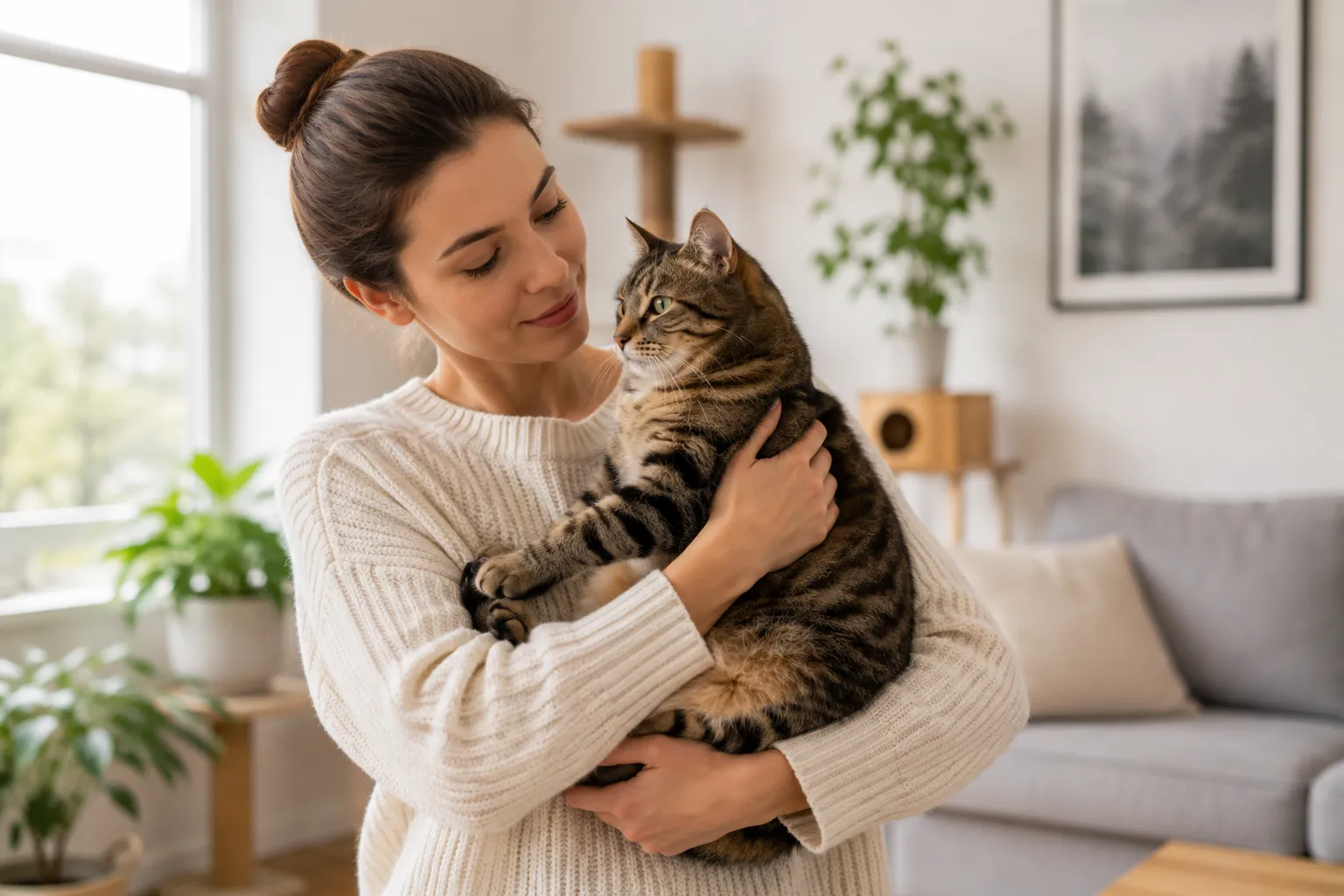
Look, we have all done it. You see your cat looking impossibly cute on the couch, your brain short-circuits, and suddenly you are scooping them up like a fluffy football for a cuddle session. Five seconds later, you are bleeding. Not because your cat is mean, but because you just handled them like a bag of groceries and their dignity — and your forearm — paid the price.
Picking up a cat correctly is not about strength. It is about technique, timing, and respecting the fact that your cat is a small predator who tolerates your existence because you have thumbs and open cans. Do it wrong, and you trigger their fight-or-flight response, flood their body with cortisol, and teach them that your hands are not to be trusted. Do it right, and you build trust, deepen your bond, and maybe — just maybe — get to hold them for a full minute before they decide they are done with you.
Here is the complete, vet-backed guide on how to pick up a cat correctly, keep them comfortable and secure, and avoid becoming a scratching post in the process.
1. Ask Permission First: Reading Cat Body Language
Before you even think about lifting your cat, you need to check if they are in the mood. Cats are not cuddle dispensers. They have opinions, schedules, and boundaries, and ignoring those is how you end up with a hiss and a half-moon scar.
According to veterinary behaviorists, a cat who wants attention will show it. Look for these green lights:
- Upright, relaxed posture with weight evenly distributed
- Ears facing forward or slightly angled, not pinned back
- Almond-shaped pupils (not dilated saucers of doom)
- A tail held straight up with a gentle curve at the tip
- Slow blinking, which is basically a cat kiss
- Approaching YOU and rubbing against your legs or hand
If your cat initiates the interaction, you are probably good to go. If they are sleeping, eating, staring out the window contemplating the universe, or actively ignoring you, let them live. Forced affection is not affection — it is a hostage situation.
Red flags that mean "absolutely not" include flattened ears, a rapidly twitching or thumping tail, dilated pupils, a crouched body, growling, hissing, or the cat moving away when you approach. Respect the "no." Your relationship will be better for it.
2. The Correct Pick-Up Technique (Step By Step)
So your cat has given you the green light. Now what? You do not just lunge in like you are grabbing a loose sock. There is a method to this, and it starts with making yourself less threatening.
Step 1: Get On Their Level
Crouch or kneel down next to your cat. Towering over them triggers their prey instincts and makes you look like a skyscraper with grabby hands. Being on their level says "I am not a threat, I am just a weird tall friend."
Step 2: The Hand Intro
Extend your hand slowly toward your cat, palm down, and let them sniff you. Some cats will rub their cheek against your fingers, which is their way of saying "proceed." If they back away or stare without engaging, abort the mission.
Step 3: Support The Chest
Slide one hand under your cat's chest, just behind the front legs. Your fingers should point toward their face. This hand supports the front half of their body and prevents that horrible dangling-legs situation that makes cats panic.
Step 4: Scoop The Rear
Use your other hand — or better yet, the crook of your elbow — to support their hindquarters and back legs. This is the most important part. A cat whose back end is dangling feels unsupported, unsafe, and instinctively struggles. According to the ASPCA, proper hindquarter support is the difference between a calm cat and a claw tornado.
Step 5: Lift Smoothly
Lift in one smooth, gentle motion. No jerking, no sudden movements. Bring the cat close to your chest so they feel your body warmth and heartbeat. Hold them securely but not tightly — think supportive hug, not straitjacket.
3. How To Hold A Cat Securely
Once you have got them off the ground, positioning matters. A secure cat is a calm cat. A wobbly cat is a cat who believes — correctly — that you have no idea what you are doing.
The classic "football hold" works well for most cats: tuck their hind end into the crook of your elbow, support their chest with your other hand, and keep them close to your body. Their back legs should never dangle. If your cat is large — like a Maine Coon or a chonky boy — you may need to use both arms like a cradle, supporting their chest with one arm and their rear with the other.
Some cats prefer to rest their front paws on your shoulder or arm. That is fine as long as their weight is fully supported. What most cats do NOT enjoy is being held belly-up like a baby. That position exposes their vulnerable underside and triggers a stress response in all but the most trusting cats. If your cat goes rigid, starts kicking, or gives you the "I will remember this" eyes, put them down.
Stand or sit still while holding them. If you need to move, do it slowly and carefully. Sudden walking motion makes a cat feel like they are on a wobbly tree branch in a hurricane.
4. How To Put A Cat Down Safely
The exit strategy is just as important as the pickup. Do not drop them. Do not let them leap from your arms in panic. Lower them gently and in control.
Bend at the knees, not the waist, and slowly lower your cat toward the floor. Keep your hands supporting them until all four paws are firmly on the ground. Then release. Letting them jump from your arms might seem harmless, but it reinforces a sense of instability and can lead to scratching as they scramble for traction.
Try to put them down while they are still calm, ideally before they start squirming. If you wait until they are thrashing to get free, you have missed their polite requests to be released and taught them that struggle is the only way out. Pay attention to early signals: a glance toward the floor, slight tensing, or a gentle push with their paws. That is cat for "I am ready to go now, thank you for your service."
5. What NOT To Do: Handling Mistakes That Stress Your Cat
There are wrong ways to pick up a cat. Some are merely awkward. Others are genuinely harmful. Here is what to avoid.
Never Scruff An Adult Cat
Mother cats carry kittens by the scruff of the neck. You are not a mother cat. Grasping an adult cat by the scruff is painful, causes significant fear and stress, and removes their sense of control. According to the AAFP and ISFM Feline-Friendly Handling Guidelines, scruffing should not be used for lifting or suspending a cat's body weight. It is unnecessary and potentially painful. The only exception is a brief, gentle scruff combined with full body support during a necessary veterinary procedure — and even then, many vets refuse to do it.
Never Lift By The Front Legs
Picking a cat up under the armpits with their back legs swinging freely is uncomfortable and unsafe. It strains their shoulders and triggers a panic response because they have zero control over their body. Always support the rear end. Always.
Never Hold Too Tightly
Gripping your cat like you are afraid they will evaporate makes them feel trapped. A trapped cat is a stressed cat. Hold them firmly enough that they feel secure, loosely enough that they do not feel restrained. If they squirm, loosen your grip slightly rather than clamping down.
Never Ignore Their Signals
If your cat is telling you they are done — tail twitching, ears rotating back, body tensing — listen. Holding a cat against their will damages trust and makes future handling harder. The exception is true emergencies or vet visits, but even then, you should use the calmest, most supportive technique possible.
6. Training Your Cat To Tolerate (And Maybe Enjoy) Being Picked Up
Not all cats come pre-programmed to love being held. Some had bad experiences. Some are naturally skittish. Some simply prefer all four paws on the ground at all times. But with patience and positive reinforcement training, most cats can learn to tolerate — and even enjoy — gentle handling.
The key is creating positive associations. Keep a stash of high-value treats nearby. Start small. Pet your cat's shoulders, then reward. Touch their chest, then reward. Lift them an inch off the ground, then reward and put them down immediately. Gradually increase the duration and height over days or weeks, always watching their body language.
Never force the training. If your cat shows signs of stress — freezing, hissing, dilated pupils — stop, give them space, and try again later at an easier level. The goal is not to turn your cat into a ragdoll. It is to make handling a neutral or positive experience rather than a traumatic one.
For cats who are genuinely fearful, work with a veterinary behaviorist or certified trainer. Some cats benefit from anti-anxiety medication before handling or vet visits. There is no shame in pharmaceutical support — it is often the kindest option for a terrified cat.
7. Special Situations: Kittens, Seniors, Pregnant Cats, And Grumpy Cats
Kittens
Kittens should be picked up frequently for socialization, but gently. Support their tiny chest with one hand and their rear with the other. Never let children carry kittens unsupervised — kids tend to squeeze, drop, or parade them around like trophies. Early positive handling sets the stage for an adult cat who trusts human hands.
Senior Cats
Older cats may have arthritis, joint pain, or reduced muscle mass. Lift them extra carefully, supporting their full body, and avoid any jostling. If your senior cat suddenly resists being picked up when they used to enjoy it, schedule a vet check. Pain is often the reason.
Pregnant Cats
A pregnant cat needs extra gentleness. Support her chest and hindquarters without putting any pressure on her abdomen. Avoid picking her up unless necessary, and never lift her in the second half of pregnancy without full support. When in doubt, let her come to you.
Post-Surgery Cats
After spaying, neutering, or any surgery, follow your vet's specific instructions. Generally, you want to avoid pressure on incision sites and support the cat by their chest and rear while keeping their body level. A pet carrier is often safer than carrying a freshly stitched cat in your arms.
Aggressive Or Fearful Cats
If you absolutely must pick up a cat who hates handling — for a vet trip or emergency — do not use your bare hands. Calmly approach from behind with a thick blanket or towel. In one quick, confident motion, place the blanket over the cat, covering their head and body. Scoop them up with the blanket folded underneath them and place them directly into a carrier. Cover the carrier with another towel to reduce visual stimuli. This is not ideal, but it is safer than a bare-handed wrestling match that traumatizes both of you.
Frequently Asked Questions
Do all cats like being picked up?
No, and that is completely normal. Some cats are naturally lap cats who crave physical contact. Others are "four paws on the floor" types who show affection by sitting near you, not on you. Respect your cat's preference. Forced cuddles are not cuddles — they are stress in a fluffy package.
Why does my cat go limp when I pick them up?
Be careful here. A relaxed, floppy cat who purrs is probably content. A frozen, limp cat with wide eyes and rigid muscles is experiencing learned helplessness — a shutdown stress response where the cat gives up because they believe their actions do not matter. If your cat goes limp but shows signs of fear, put them down gently and reassess your approach. True relaxation involves soft muscles, slow blinking, and maybe a purr.
Is it okay to hold my cat like a baby?
Only if your cat genuinely enjoys it. Some cats love being cradled belly-up in the crook of your arm. Most do not. The belly-up position exposes their most vulnerable area and triggers a stress response in cats who are not 100% secure with you. Test it briefly, watch their reaction, and abort immediately if they tense up. Never force it.
My cat scratches me every time I pick them up. What am I doing wrong?
You are probably either picking them up when they do not want it, failing to support their rear end, or holding them too long. Go back to basics: ask permission with your hand, support the chest and rear, lift smoothly, hold securely, and put them down at the first sign of discomfort. Also, trim their nails regularly. It helps.
How can I get my cat used to being handled for vet visits?
Practice at home. Touch their paws, ears, mouth, and belly while giving treats. Get them comfortable with short periods in a pet carrier by leaving it out as a cozy bed with treats inside. The more positive associations they have with handling and carriers, the less traumatic vet day will be. Some vets also offer "happy visits" — short, treat-filled drop-ins where nothing scary happens.
Should I pick up a stray or feral cat?
Unless you have specific training, do not attempt to pick up a feral or unknown stray cat. These cats are not socialized to humans and will defend themselves fiercely. If a stray needs help, confine them safely using a humane trap and contact your local vet or animal shelter. Your emergency room co-pay is not worth the Instagram photo.
Related CatCutieSweet Guides
- Psychological benefits of owning a cat
- How to introduce a new kitten to your cat
- How to pick the best cat breed for your lifestyle
The Bottom Line
Picking up a cat correctly is not rocket science, but it is also not something you should freestyle. The formula is simple: ask first, support always, hold securely, release early, and never — ever — scruff an adult cat.
Your cat is not a stuffed animal. They are a sentient, opinionated creature who deserves to feel safe in your hands. When you handle them with respect, technique, and attention to their body language, you are not just avoiding scratches. You are building trust. And trust is the foundation of every great human-cat relationship.
So the next time your cat looks irresistibly scoopable, pause. Read the room. Approach like a diplomat, not a linebacker. Support that rear end like your life depends on it — because honestly, your skin kind of does. And if they decide they are done after thirty seconds? Put them down with grace, offer a treat, and try again tomorrow. Consistency, patience, and a little humility go a long way in the feline world.
Now go forth and lift responsibly.