
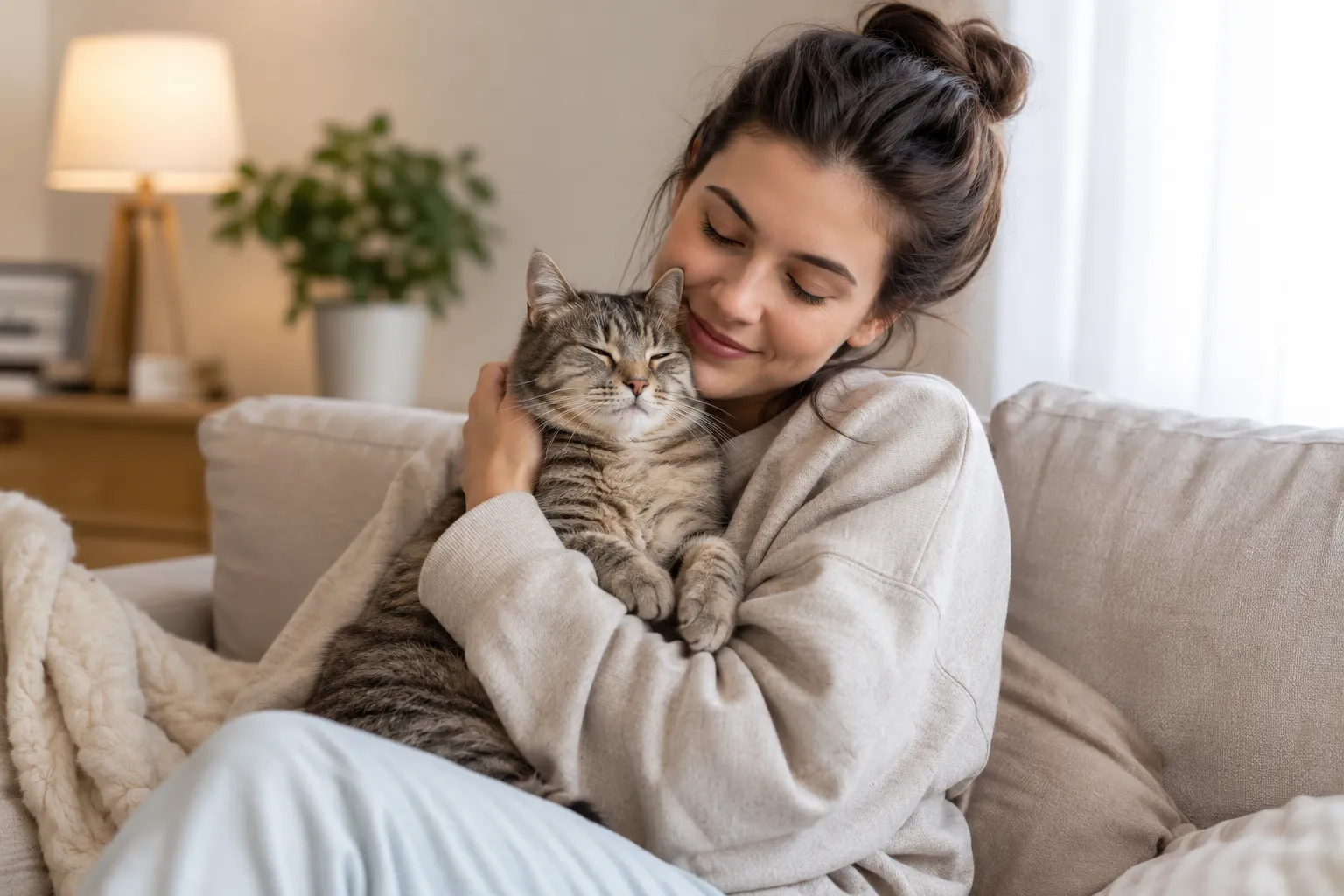
Let’s be honest: cats are tiny, furry chaos agents who will knock your coffee cup off the table, scream at 3 a.m. for no reason, and then act like you are the problem. But if you’ve ever had a rough day and found your cat curled up on your lap, purring like a little motorboat, you already know the truth — these weirdos make us feel better. Way better.
Turns out, that warm fuzzy feeling isn't just in your head. Okay, technically it is in your head — specifically in your brain chemistry — but it's backed by real science. Researchers have spent decades studying the human-animal bond, and cats consistently show up as unexpected mental health heroes. Whether you're a lifelong cat person or just cat-curious, here's the full scoop on how owning a cat can seriously upgrade your psychological wellbeing.
1. The Science Behind the Human-Cat Bond
Before we dive into the feel-good stuff, let's talk about why cats hit different. Unlike dogs, who basically worship the ground you walk on, cats are independent, selective, and sometimes downright aloof. But that makes their affection feel earned — and science says that matters.
A study from the Human-Animal Interaction Lab at Oregon State University found that cats form secure attachments to their owners, similar to the bonds between parents and children or romantic partners. When a cat chooses to trust you, that bond triggers deep emotional security. It's not about being needed 24/7; it's about being chosen. And psychologically, that hits hard.
This attachment is part of what therapists call the human-animal bond — a cross-species connection that benefits both parties. For humans, it creates a safe emotional anchor without the social pressure of human interaction. No judgment, no awkward small talk, just quiet, steady companionship.
2. Cats Are Basically Fuzzy Little Stress-Busters
Had a terrible day at work? Your cat doesn't need the whole story. They just need you to sit down so they can knead your lap like a tiny baker and purr until your blood pressure drops.
Here's the wild part: interacting with cats actually changes your brain chemistry. When you pet a cat, your brain releases serotonin and dopamine — the same neurotransmitters that antidepressants try to boost. At the same time, your cortisol levels (that nasty stress hormone) take a nosedive.
Research published in the Journal of Vascular and Interventional Neurology found that cat owners were significantly less likely to die from heart attacks or strokes compared to non-cat owners — a benefit largely attributed to stress reduction. Another study showed that college students who spent just 10 minutes a day petting cats experienced measurable drops in cortisol. Ten minutes! That's shorter than most TikTok doom-scrolling sessions.
And oxytocin — the "love hormone" responsible for bonding and emotional warmth — also spikes during cat interactions. So yes, science confirms that cuddling your cat is basically a free, furry therapy session.
3. Easing Anxiety and Depression (No, Really)
Let's be crystal clear here: a cat is not a replacement for professional mental health treatment. If you're dealing with depression or an anxiety disorder, please talk to a therapist. But can cats help? Absolutely.
Cats provide what psychologists call "non-judgmental social support." They don't care if you haven't showered, if you're wearing the same sweatpants for three days, or if you cried during a cereal commercial. That unconditional acceptance creates a psychological safe space that can buffer against depressive thoughts and anxious spirals.
Studies show that the simple act of stroking a cat stimulates serotonin production and acts as a natural mood stabilizer. For people with mild to moderate symptoms, this daily interaction can be a meaningful complement to traditional therapy. In fact, cats are frequently used as emotional support animals (ESAs) and in animal-assisted therapy programs for patients navigating PTSD, grief, and trauma recovery.
There's even research suggesting that single people with cats often report fewer negative emotions and less seclusion than people without pets. One older study found that cat owners were sometimes happier than people who had both a cat and a romantic partner. (No comment on what that says about some relationships, but... yikes.)
4. Purring: Nature's Weirdest Healing Frequency
If you've ever wondered why a cat's purr feels weirdly therapeutic, buckle up — this is wild.
Cats purr at a frequency between 25 and 150 Hertz. That specific range happens to be the same frequency used in therapeutic ultrasound devices to promote bone density, heal wounds, and reduce inflammation. Dr. Leslie Lyons at the University of Missouri College of Veterinary Medicine has noted that purring at low frequencies may stimulate muscle repair and even promote bone healing in cats.
The jury is still out on whether humans absorb literal physical healing from purring, but the psychological effect is undeniable. That rhythmic vibration triggers the release of endorphins in humans — your body's natural painkillers and mood elevators. It lowers heart rate, slows breathing, and creates a meditative state. It's basically ASMR before ASMR was cool, except it's warm, fuzzy, and occasionally drools on you.
Cat owners have reported that purring helps with tension headaches, menstrual cramps, and general emotional overwhelm. Even watching cat videos online has been shown to boost energy and positive emotions. So yes, your late-night YouTube spiral of cats knocking things over? Self-care.
5. Combating Loneliness in a Disconnected World
Modern life is weirdly isolating. We have hundreds of online friends and still feel alone. Enter: the cat.
Cats offer a unique form of companionship that fills the gap between solitude and social burnout. They're present without being demanding. They provide structure without stress. For people living alone, working remotely, or navigating social anxiety, a cat offers what researchers call "affective bonding" — emotional connection without performance pressure.
A study published in the Journal of Personality and Social Psychology found that pet owners generally had higher self-esteem, were less lonely, and were more physically fit and conscientious than non-owners. For elderly individuals, cat companionship has been linked to reduced feelings of isolation and even fewer doctor visits during stressful life events.
Millennials and Gen Z — often dubbed the "loneliest generations" — are increasingly turning to cats as family members. A 2024 survey found that 82% of pet owners say their pets are "like their own child." That might sound dramatic to non-pet people, but psychologically, it makes perfect sense. Cats become part of our social network, our daily routine, and our sense of belonging.
6. Cats Give You a Reason to Get Up (Literally)
Depression has a sneaky way of making you want to stay in bed forever. But cats? Cats have opinions about that. And by opinions, I mean they will sit on your face, knock your phone off the nightstand, or yowl like a fire alarm until you feed them.
This isn't annoying — it's actually therapeutic. Caring for another living being creates what psychologists call "behavioral activation." It's a fancy term for "having responsibilities that force you to engage with the world." When you get up to feed your cat, clean the litter box, or open a window for them to stare at birds, you're performing small acts of self-care by proxy.
Research shows that nurturing another creature satisfies a fundamental human need. When people lose their ability to care for others — whether through retirement, empty nesting, or illness — rates of depression tend to climb. Cats provide a low-stakes, high-reward outlet for that nurturing instinct. Plus, their daily routines (the 6 a.m. breakfast demand, the evening zoomies) give your brain much-needed structure, which is especially helpful for people with ADHD or mood disorders.
7. Better Sleep, Better Brain
They don't call them "cat naps" for nothing. Studies have shown that people who sleep with their cats in the room — or even in the bed — often report better sleep quality, falling asleep faster, and feeling more rested. Unlike dogs, who might snore like a chainsaw or demand midnight walks, cats are relatively quiet sleep companions.
Some research even suggests cat owners wake up less throughout the night compared to dog owners. Your cat's calm, rhythmic breathing can act as a natural sleep aid. Just be prepared for the occasional 4 a.m. "I caught a sock and it was terrifying" announcement. Nobody's perfect.
8. The Personality Perks of Being a Cat Person
Here's a fun one: cat owners tend to score higher on openness, imagination, and curiosity in personality studies. They're often more sensitive, more trusting, and — according to one controversial but entertaining study — may even score higher on intelligence tests than dog owners. (Dog people, please don't @ me. We can both be pretty and smart.)
Owning a cat also seems to improve human-to-human relationship skills. The empathy and patience required to bond with an independent animal translates into better emotional regulation in human interactions. Cat owners learn to read nonverbal cues, respect boundaries, and appreciate quiet affection — all skills that make for healthier friendships and partnerships.
Frequently Asked Questions
Can cats sense when you're sad?
Yes, actually. Research shows cats can detect human emotional states through auditory and visual cues like facial expressions and tone of voice. They may not understand why you're sad, but they often respond by staying closer, purring more, or offering physical proximity. It's their version of a hug.
Is a cat better than a dog for anxiety?
It depends on your personality and lifestyle. Dogs require more active engagement, which can be great for some people but overwhelming for others. Cats are lower-maintenance and provide calm, steady companionship without the social pressure of constant interaction. For introverts or people with social anxiety, cats are often the perfect fit.
Can a cat really improve my heart health?
Studies suggest a link. The stress-reducing effects of cat ownership — lower cortisol, reduced blood pressure, and decreased anxiety — contribute to better cardiovascular health. One study found cat owners had up to a 30% lower risk of heart disease. Again, cats aren't a magic cure, but they're a heart-healthy lifestyle factor.
What if I'm allergic to cats?
If allergies are mild, some people find that regular grooming, air purifiers, and designated cat-free zones help. However, if allergies are severe, the stress of constant symptoms might outweigh the psychological benefits. Consider hypoallergenic breeds or consult an allergist before committing.
Should I get a cat if I'm struggling with mental health?
Cats can be wonderful companions, but pet ownership is a responsibility. If you're in a stable place to care for an animal, a cat can absolutely enhance your wellbeing. If you're in crisis or unable to manage daily tasks, focus on your own recovery first. You can always visit a cat café or foster temporarily to get those feline vibes without the long-term commitment.
The Bottom Line
Cats are weird. They're dramatic, mysterious, occasionally destructive, and they definitely know how to push your buttons. But they're also scientifically proven mood boosters, stress reducers, and loneliness fighters. From the chemical magic of oxytocin and serotonin to the simple comfort of a warm purr on a cold night, the psychological benefits of owning a cat are real, measurable, and honestly — pretty amazing.
So the next time your cat wakes you up at dawn because they can see a ghost that definitely isn't there, just remember: you're not just a servant to a tiny monarch. You're a participant in one of nature's most underrated mental health partnerships. And honestly? That's a pretty great deal.